About Menopause and Mind
Menopause and Mind focus on raising awareness of the impact of menopause on mental health, and providing support for people experiencing menopause-related mental health struggles. Our focus is on well-being, transformation and connection, and intergenerational sharing. We explore creative approaches to mental well-being and practices of collective care, and look at the language around menopause.
We recognise that the mainstream narrative of menopause does not include everyone and discriminates and excludes many marginalised voices, including (not exhaustively) LGBTQIA+, trans voices, minority ethnic voices and neuro and physical diverse groups. We also recognise the negative impact that adverse childhood experiences have during menopause and that menopause happens at many ages, and impacts on those experiencing POI (Premature Ovarian Insufficiency) and surgical menopause can be particularly challenging. There is a lack of information of the impact of other conditions such as endometriosis on menopause due to lack of high quality research. Menopause and Mind embrace menodiversity and welcomes any person experiencing menopausal symptoms from any background. We are open to feedback and to improve our sessions, and to ensuring that we are using inclusive language and approaches. We support the aims of the Menopause Inclusion Collective
Overview
It has been a wonderful year albeit on a shoestring budget for the Menopause and Mind group. There has been a lot of laughter, joy and shared stories in our sessions. Menopause and mental health may have more public visibility but there is growing need for collective, care, support, information and access to information. Run as a by us, for us group it is always a challenge while we navigate perimenopause, neurodivergence, and our own responsibilities. Still the Menopause and Mind team is stronger than ever, with people moving from members to facilitators and bringing skills into the room that have helped us build, share and grow. We would like to share some our journey with you this year in this annual report.
Over the past year, Menopause and Mind has delivered programme of 17 events, supporting a total of 81 individuals experiencing menopause and perimenopause, and growing our broader network to over 200 followers. Our work this year has focused on improving mental health and wellbeing through creative, inclusive, and community-based approaches. We have engaged with national documentary projects as well as local research.
The programme responds directly to a significant and growing gap in support. While menopause is widely recognised as a physical transition, its psychological, emotional, and social impacts remain under-addressed. Our work provides accessible, holistic support that centres lived experience, connection, and self-understanding.
What We Delivered
Our programme combined peer support, creative practice, and specialist input, offering multiple ways for participants to engage. Events were delivered both in-person and online and included, some of these ran more than once:
- Revisiting Inner Kindness (online and in-person)
- Self-Care through Creating Embossed Foil Art
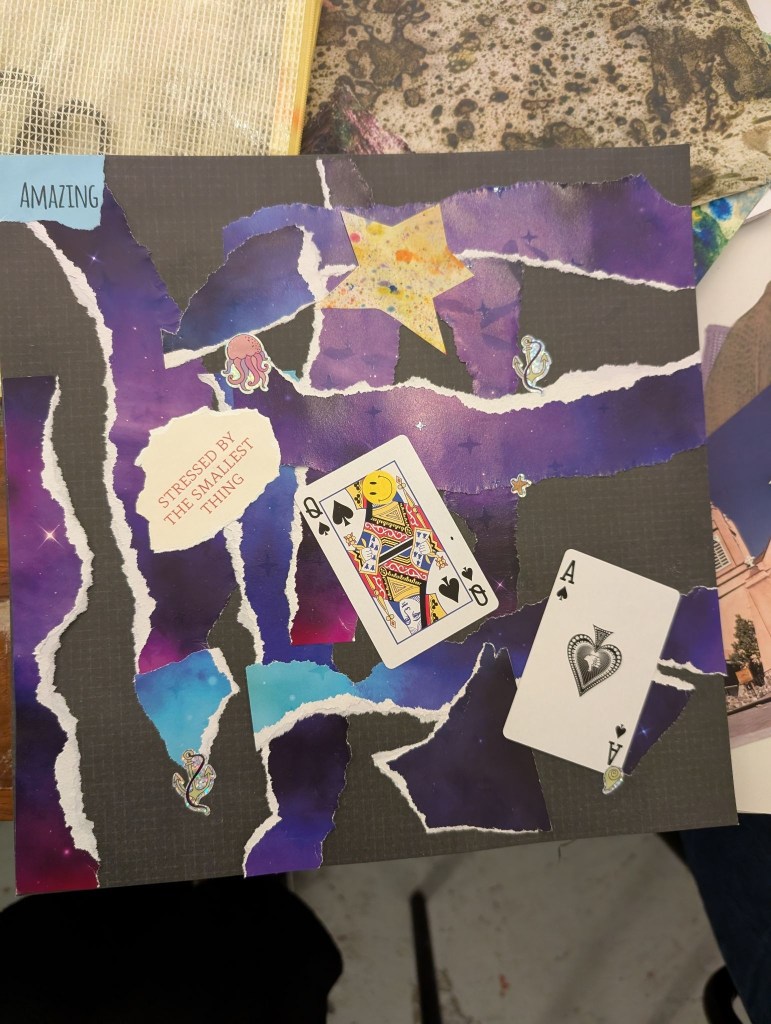
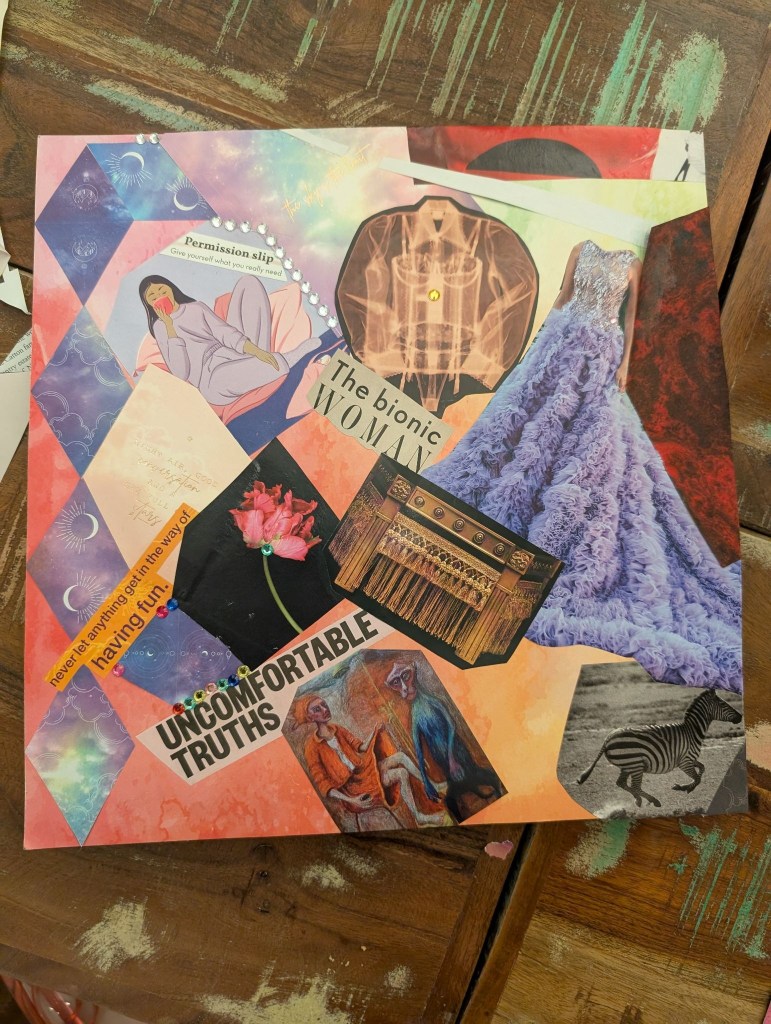
- Cutting the Crap Collage
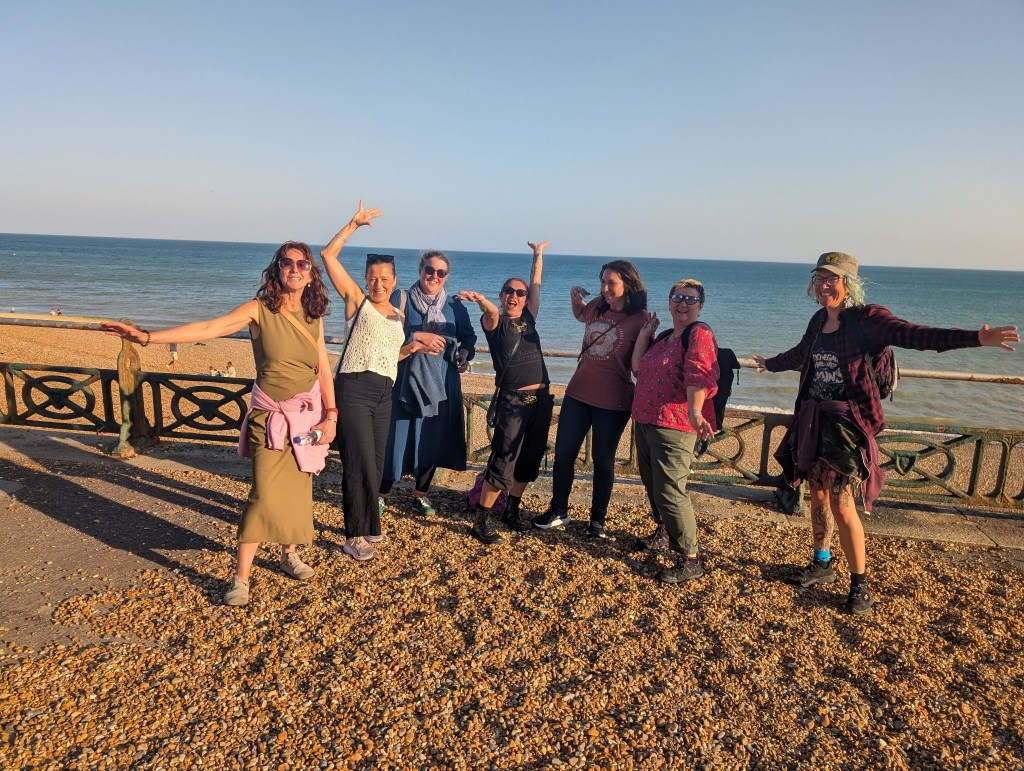
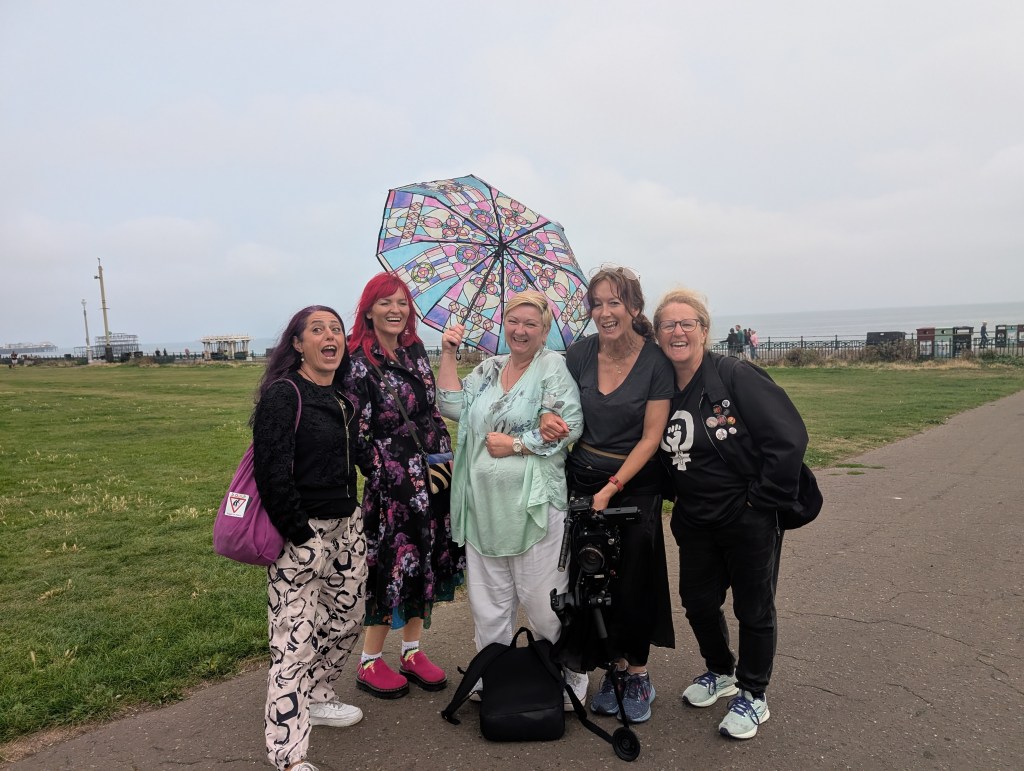
- Mindful Seafront Walk and Seafront Walk, Chat and Filming Session
- Mindful Solstice Origami
- Reflective Tarot and Oracle Cards for Self-care
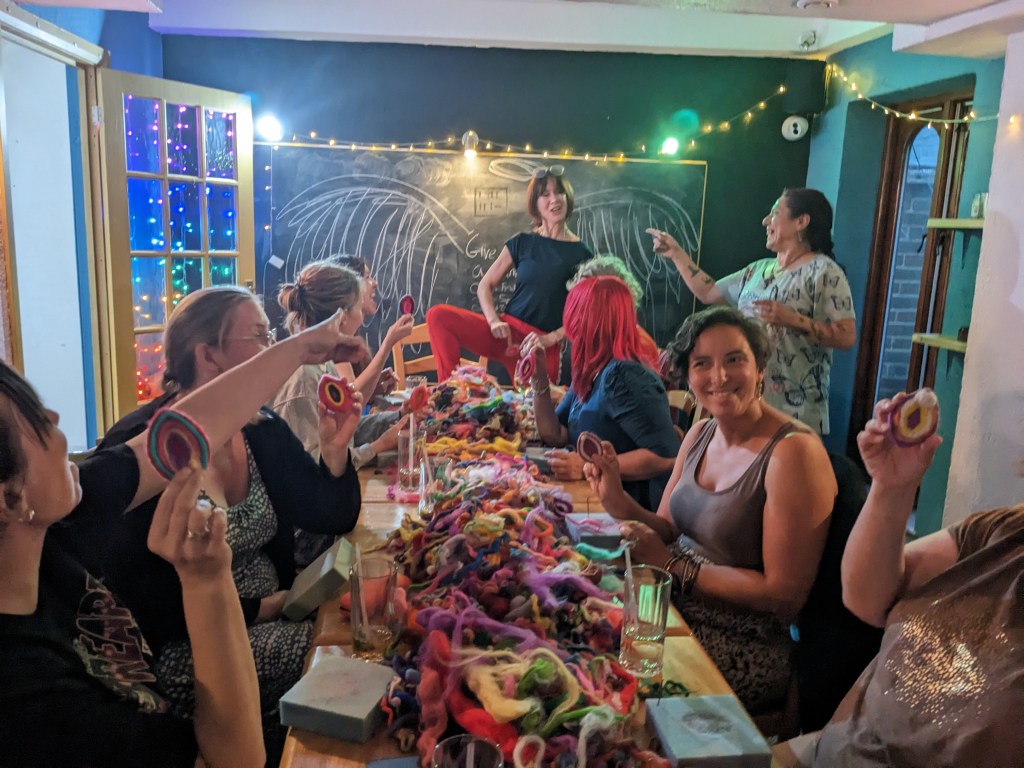
- Felt a Fanny
- Mix and Fix – Stitch and Bitch
- Hypnotherapy for Hormones
- Spring Circle Gathering
- Winter Celebration Care Café
- Mindful Eating & Self-Kindness (online)
- Exploring Early Life and Its Impact on Your Menopause
A key feature in our work was integrating creative activity with peer support. We have a trauma informed approach, which enables participants to process their experiences in an accessible and embodied way, while also building confidence and a sense of achievement. We have also had many participants stepping up to facilitate events, bringing their unique skills to share with the group. This reinforces our ethos of the group being guided by its members.
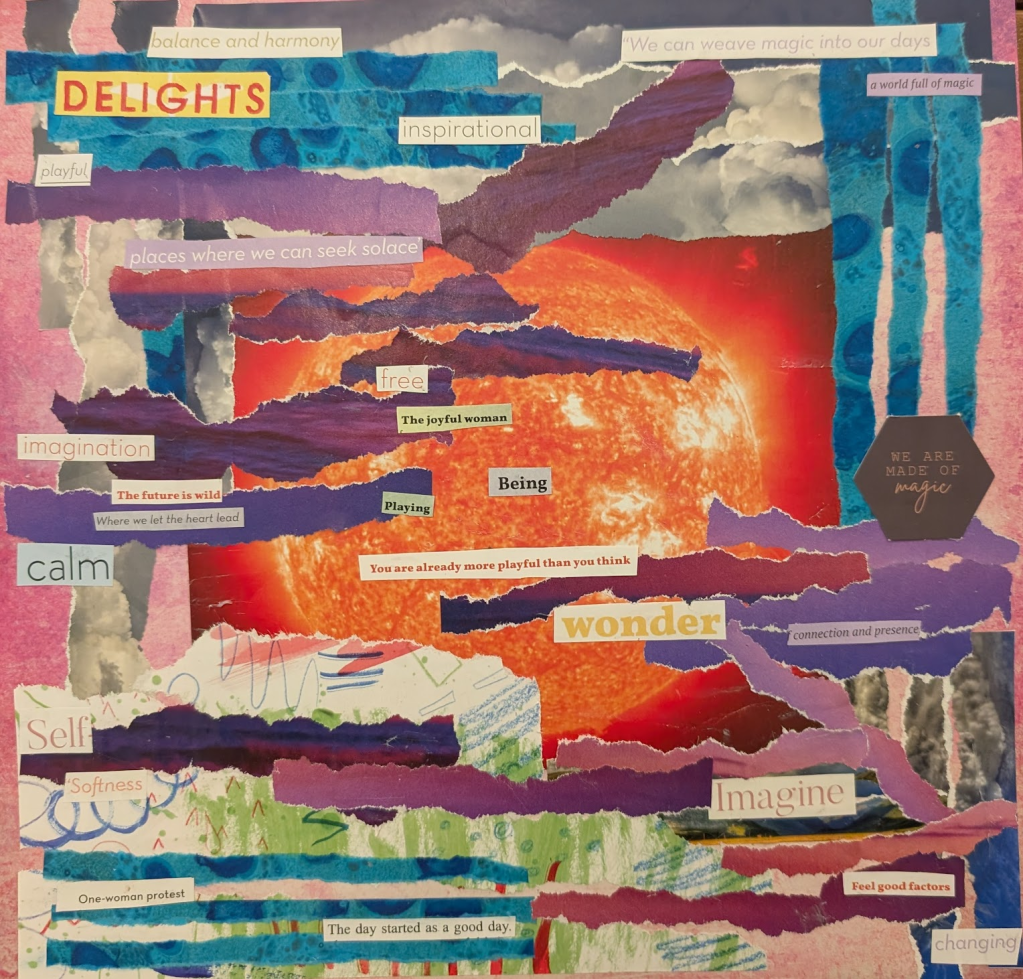
We delivered sessions in community spaces with partners Justlife, the Cornerstone Community Centre and outside on Hove Seafront, and online making the most of the free spaces that we can access, and ensuring wherever possible that spaces were fit for purpose and wheelchair accessible. We delivered free Cutting the Crap Collage sessions for Justlife meet up.
Understanding the Need
Insights from our participant survey (63 respondents) highlight the significant challenges faced during menopause, particularly in relation to mental health, access to support, and wider life impacts .
Menopause is experienced as a complex, whole-life transition:
- 91% reported poor concentration
- 86% experienced forgetfulness
- 84% reported anxiety
- 73% reported poor memory
- 68% experienced irritability
Demand for support is high and often unmet:
- 82% said they would like more mental and emotional support
- Over half reported difficulty accessing mental health support
- 37.5% said there had not been enough free support available
Menopause is also impacting people’s wider lives:
- Nearly half reported a negative impact on their ability to work
- Almost half reported impacts on family life
- Many described reduced income, leaving employment, or financial instability
These findings demonstrate a clear need for accessible, community-based, and psychologically informed menopause support.
Funding and Finance
We received funding from Sussex Community Foundation of £3000 assisted in the delivery of 17 events for which we are deeply grateful, and this has supported:
- Free and low-cost access to reduce financial barriers
- Safe, welcoming, and inclusive environments
- Expert-led sessions and specialist input
- Creative workshops with materials provided
- A mix of online and in-person delivery
We also received £207.06 in donations through Eventbrite. We also had various in kind support with venues, expert volunteer time, free donations of Sentia, an alcohol free spirit, from the company which we hope will continue. Alcholo can be a struggle for many at this transitional time and particpants are grateful to have the experience of social drinking without alocohol. This supported partnership and outreach activity, extending the reach and influence of the programme.
Our final balance sheet at the end of the financial year was £189.02, we are currently awaiting the outcome of a Sussex Community Foundation application. Future funding applications will be at the discretion of the board as the current Research and Development Manager is leaving the organisation to relocate to another country and at present no funds are in place to replace the work done. This is a significant risk as they have been in charge of fundraising and much of the in kind work.
| In Kind Resources (Estimated) | Cost |
| Website Maintenance | £500.00 |
| IT Support | £500.00 |
| Sentia Donation of Alcohol Free Spirits | £350.00 |
| Art Resource Donations | £350.00 |
| Consultant Research and Write Up Fees | £1,000.00 |
| Facilitation Time | £600.00 |
| Handover for leave of R&D Manager | £1,000.00 |
| Total | £4,300.00 |
| Donations and Grants | |
| Sussex Community Foundation | £3,000.00 |
| Member Donations | £207.06 |
| Total | £3,207.06 |
| Overall Income including In Kind Resources | £7,507.06 |
Impact on Participants
Feedback from participants demonstrates a strong and consistent positive impact.
- Sessions were widely experienced as safe, supportive spaces: “Kind, supportive and compassionate safe space for all.”, “Wonderful, accepting, validating, warm, friendly and life affirming!”
- A key outcome was reduced isolation: “Meeting other people experiencing menopause has been incredibly informing, inspiring & comforting.”, “Without it, I would have felt way more isolated and confused about my experience.”
- For some, the impact has been ongoing and life-changing: “Having this group was a lifesaver… the support… helped me considerably every month for the last 2 years.”
- Creative approaches were particularly effective: “The sharing whilst getting your hands into something creative… gives you something to take away… a sense of accomplishment and growth.”
- Participants also valued the opportunity for open expression: “Absolutely fantastic supportive open conversations and also the opportunity to laugh, rant etc.”
While feedback was overwhelmingly positive, some participants highlighted preferences around format, accessibility, and framing of menopause. This feedback is informing ongoing development. We had one issue that while did not trigger our safeguarding possibility
Participant Testimonial
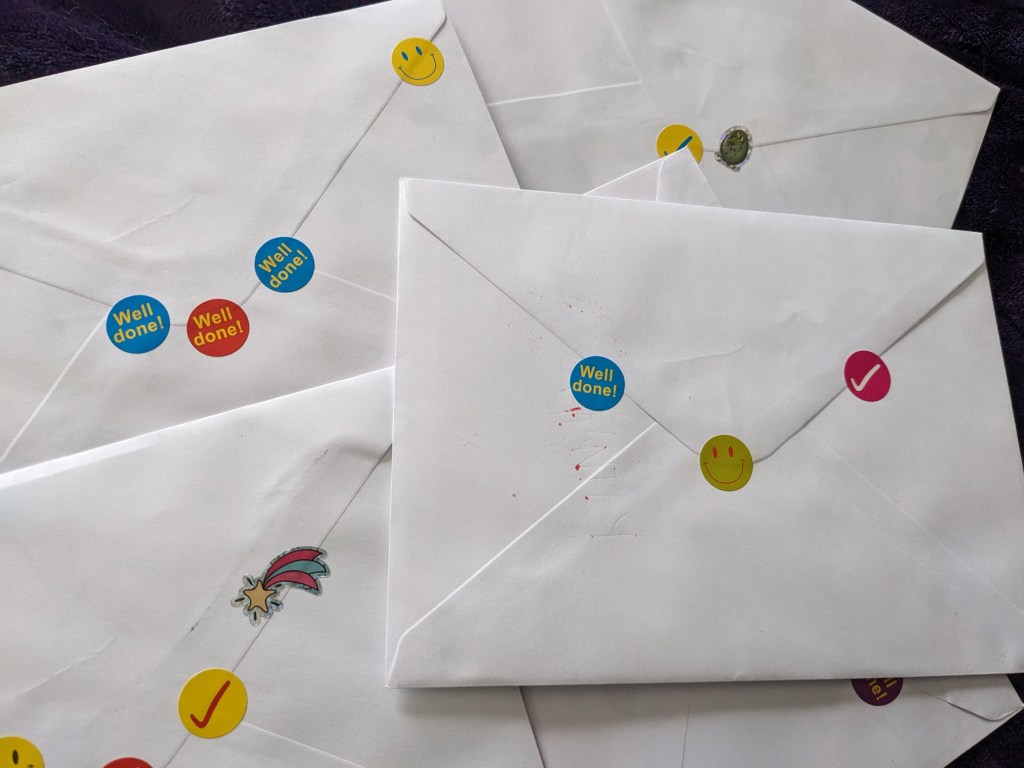
“Menopause and Mind has helped me so much – menopause hit my mental health and energy levels like a ton of bricks. Trying to find support from the NHS left me exhausted, disheartened and feeling like I knew more than the GP just from my own reading and internet searches. I’d found menopause support and information on the internet but it all seemed to come with a book to sell, a supplement or coaching to buy.
When I found Menopause and Mind, it was such a relief to find a space with no agenda apart from supporting each other through this tricky transition without judgement, sharing knowledge without pressure or expectation. Through talking to the other group members, it made me realise that I was not alone, not ‘going mad’ and helped me navigate life so much more easily than before. The activities we do help connect us both to reconnect with creativity, give us tools for life, help us reflect on who we are now.
The safety of a space where the values of confidentiality, inclusion, choice and agency were reinforced through the guidelines and practice was a lifeline for me. It enabled me to talk through the massive upheaval that menopause had for me. I started to realise that I had been masking neurodiversity my whole life and that menopause had stripped away the ways I was able to mask before. Recognising this has meant I’ve been able to put in place a support system and find methods to help my life be so much better.
For me the fun, knowledge, tears and above all, laughter have helped me so much. In a world where we have so far to go still with supporting those going through menopause, I found a community that helped me thrive and grow. I felt like I lost myself and my identity and the group helped me find that again. I had to leave my job due to struggling with menopause and ADHD, the group supported me through that. I have since re-trained and am beginning a new career, thanks in no small part to the confidence I have gained from this incredible group.”
Research and Wider Impact
Housing and Financial Inequality
Alongside direct delivery, Menopause and Mind has contributed to wider research and advocacy work, highlighting the broader structural challenges faced by those experiencing menopause.
For ACORN Community Union, we undertook a piece of research exploring the intersection of menopause with housing and financial insecurity. Findings from this work highlighted the significant ways in which menopause can exacerbate existing inequalities, particularly for those experiencing unstable housing, reduced income, or financial stress.
Participants described how menopause symptoms—such as fatigue, anxiety, and cognitive challenges—can directly impact employment, financial stability, and the ability to maintain secure housing. These findings strongly echoed our wider survey data, where many respondents reported reduced income, leaving employment, or financial strain as a result of menopause.
This research was shared publicly through our website, contributing to a growing evidence base around menopause and socio-economic inequality, and helping to raise awareness of the need for more joined-up support across health, housing, and employment sectors. Importantly, this work positions Menopause and Mind not only as a service provider, but as a contributor to wider conversations about inequality, health, and social justice.
My Cinema Clinic – The Menopause
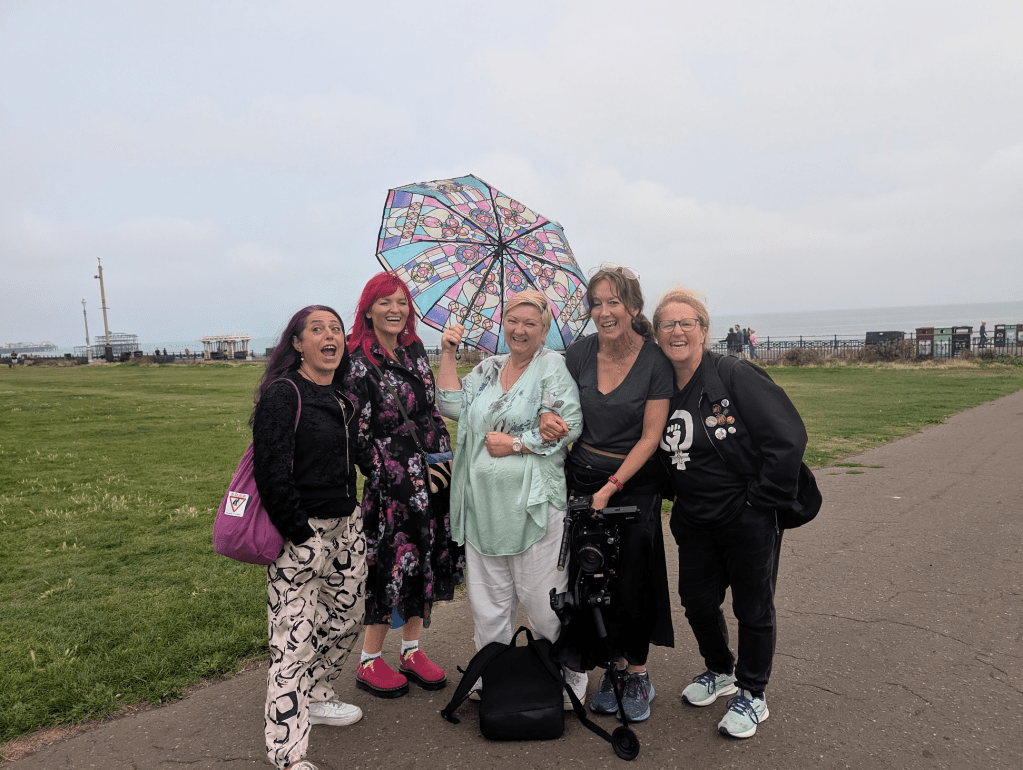
One of the most exciting projects we have been involved with is My Cinema Clinic: The Menopause, which is a documentary that will soon be released https://www.mycinemaclinic.com/ with our board member Lily Murray who is a professional documentary film-maker. While the final footage of the documentary is not yet available you can see clips of some of our members being interviewed and we had a specific interview and walking session on the beach as one of our Menopause and Mind sessions.
As part of this collaboration, Menopause and Mind hosted a dedicated filmed session, including a seafront walk and open workshop. This created a supportive environment where participants could choose how to engage, through one-to-one interviews or by contributing their voices in a more informal group setting.
This approach was particularly important in ensuring accessibility and consent, allowing individuals to share their experiences in ways that felt safe and appropriate to them. Participants from our community were interviewed for the documentary, helping to amplify lived experiences of menopause that are often underrepresented. The project extends the impact of our work beyond direct participants, contributing to wider public awareness and dialogue around menopause and mental health.
Giving Voice to Menopausal Women in the Criminal Justice System
The Menopause & Mind group has created a safe and supportive space, bringing women together and enabling meaningful, often previously unheard, conversations. As a direct result of these connections, two members, a filmmaker and a practitioner working with women in the criminal justice system, have successfully secured funding from HMPPS to develop a documentary exploring women’s experiences of menopause and perimenopause in prison and on probation.
This project will centre the voices of women themselves, capturing their lived experiences during what can be a complex and transitional stage of life. The completed documentary will serve as both a supportive resource for women within the criminal justice system and an educational tool to inform and enhance practitioner understanding and practice. Further information will be available later in the year.
Contributing to other Academic Studies
We contributed to the 3d Metasteps space of the Fail Again, Fail Better? network to re-evaluate the place of failure in utopia, addressing both utopian fictional narratives, and radical experiments in living and governing. You can find more information here: Fail Again, Fail Better? Recuperating Failure in Utopian Politics and Research. This has been part of an ongoing three year project where we have used the Menopause and Mind Care Cafe Structure as a case study at academic settings in Edinburgh University, University of Newcastle and King’s College London.
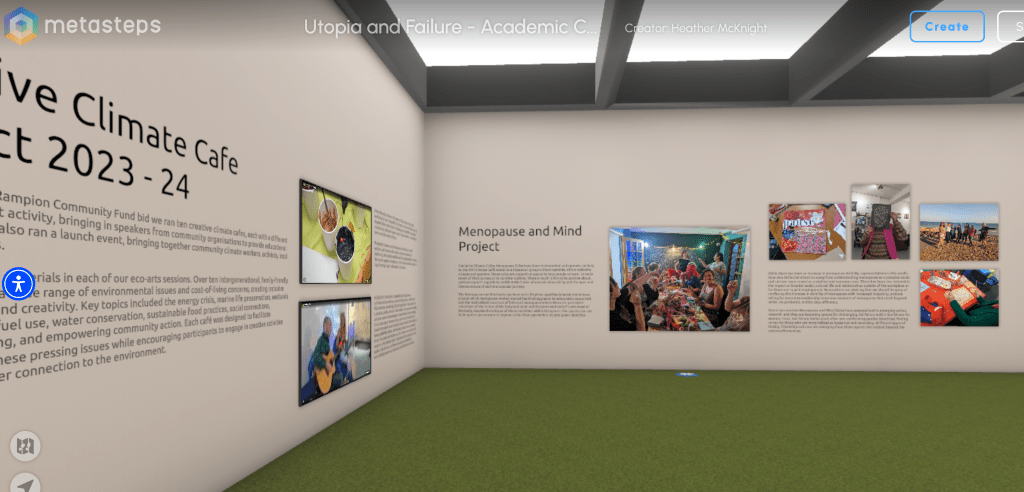
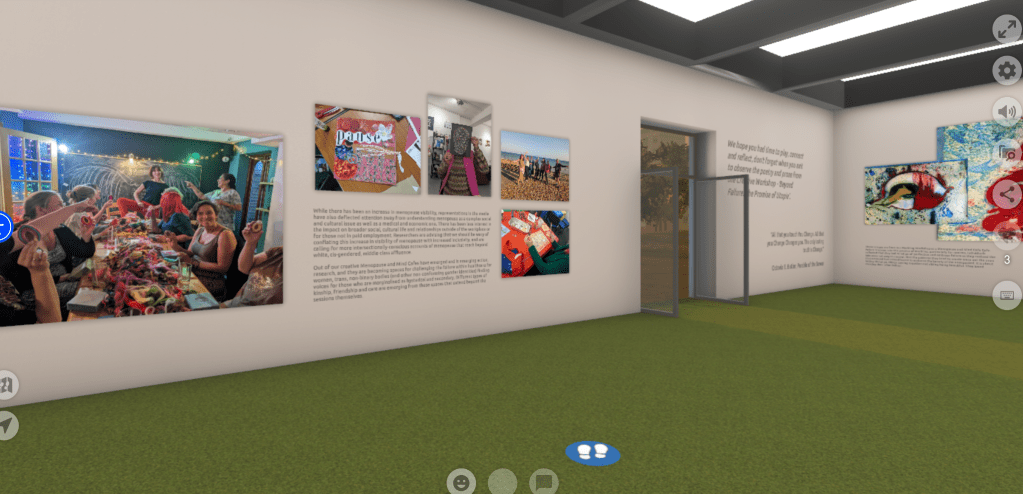
As part of this project, we created an online metasteps space where people can convene, and view in a 3D online space representing some creative elements from the project at any time. You can click this link with or without a login and see the site! You will find the Menopause and Mind resources as part of the information in the third chamber of the space:
https://metasteps.com/viewer/adc094ed-4b13-492d-a364-ace52b2642a3
We also contributed to researching and supporting future work on the current context of psychosocial support for perimenopausal women in the UK at Brighton and Sussex Medical school. The report is not yet released but highlights a lack of necessary psychosocial support for perimenopausal women in the UK.
Conclusion and Key findings
- This year has been a struggle for funding but we have made an impact locally and nationally, contributing both practically and academically to the narrative on Menopause and Mental Health.
- We have a network of over 200 individuals in the Brighton and Hove area
- This year 81 individuals were supported through face to face sessions
- 17 events were delivered
- 82% of participants want more mental health support
- We are having a successful impact on finding diverse voices
- Our feedback forms, testimonials and casework show strong evidence of reduced isolation and improved wellbeing in our community and in the wider community.
- We have integrated into national and local research and significant projects that raise the profile of menopause and mental health
Key learning from the programme includes:
- The need for flexible scheduling to improve attendance
- The importance of offering varied formats to suit different preferences
- Ongoing barriers relating to transport, timing, and awareness
- The increasingly challenging fundraising market
This year’s programme has demonstrated the significant value of community-based, creative menopause support. Across 17 events and 81 participants, and has grown the network to over 200 participants, Menopause and Mind has created spaces that are not only informative, but deeply supportive and, in many cases, life-changing. Our governing board has gone from strength to strength becoming highly involved in seeking out new projects for involvement and becoming increasingly active in ensuring sessions happen despite funding shortages.
Our survey findings reinforce the urgent need for this work, particularly in addressing gaps in mental health support and accessible provision. Through both direct delivery and wider research and partnership activity, Menopause and Mind is helping to ensure that menopause is better understood, more openly discussed, and more compassionately supported.
Through partnerships and research activity, Menopause and Mind has contributed to a wider understanding of how menopause intersects with issues such as housing, employment, and financial insecurity, helping to inform broader conversations and future policy and practice. Continued funding will enable us to expand this work, reach more individuals, and deepen our impact.
Overall Outcomes
The programme has delivered the following key outcomes:
- Reduced Isolation and Increased Connection – Participants reported feeling less alone and more connected to others with shared experiences.
- Improved Mental and Emotional Wellbeing – Participants experienced increased confidence, reduced anxiety, and improved emotional resilience.
- Increased Knowledge and Self-Understanding – Participants developed a deeper understanding of menopause and its impact on their lives.
- Increased Confidence to Seek Support – Participants felt more able to engage with healthcare services and advocate for their needs.
- Access to Inclusive and Creative Support Spaces – Participants benefited from safe, welcoming environments that supported a range of experiences.
- Amplification of Lived Experience – Through projects such as My Cinema Clinic, participant voices have reached wider audiences.
- Contribution to Broader Research and Change – Partnership work has contributed to greater understanding of menopause in relation to housing, employment, and inequality.
Dr Heather McKnight
Research and Development Manager on behalf of the Menopause and Mind Board
Date: 22/04/2026



 Menopause and Mind
Leave a comment