
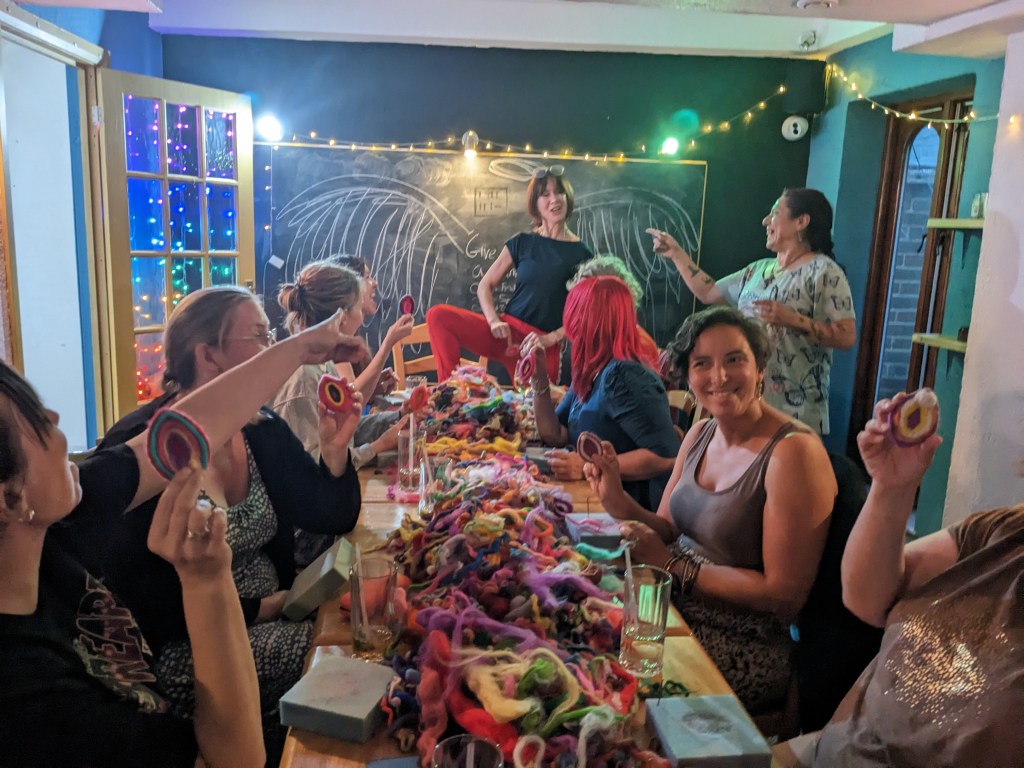
Menopause and Mind is a new project focusing on raising awareness of the impact of menopause on mental health, and providing support for anyone experiencing menopause-related mental health struggles. Here are some notes from our inner kindness workshop that will hopefully be of some use to you on your unique if at times challenging menopause journey.
Some things our participants have found helpful on their journey…
- ADHD and productivity – seed talks https://www.eventbrite.co.uk/o/seed-talks-36463428713
- Gong baths – Siobhan Swider https://www.siobhan-swider-harpist.com/sound-bath-dates and Kirsty Nazaré https://insighttimer.com/kirstynorton
- Acupuncture – community clinics – https://hovecommunityacupuncture.com/
- BHSF – low cost health insurance – £8 per month but 100% back and 50% off other practices – cap of £70 on dental and £250 on other things https://www.bhsf.co.uk/
- Recommendation to throw a biro at a wall, low damage, good noise, look into plate smashing workshops!
- Equine Therapy – Spirit Horse Works https://www.spirithorseworks.com/ and Eagala https://www.sussexequinetherapy.co.uk/meet-the-team
- Grow Project Brighton – nature therapy – https://www.growingwellbeing.org.uk/
Self-Care and Collective Care
When it comes to inner kindness so much is about how you feel and are in yourself, and how much time and respect you give to yourself. This means that your mental and physical wellbeing are directly connected to how kind you are being to yourself levels. While we can not all be super fit and hyper positive there are some simple things we can try to improve our wellbeing and through this how kind we can be to ourselves in how we think and feel feel. While I have separated mind and body here for convenience it is worth noting that they are interconnected and improving one will help the other!
At the end of this blog I have some links to exercises you can do yourself, mindfulness and meditation practices that promote self kindness even if they are very short, can have a hugely beneficial place in our day to day work.
Emotional wellbeing – neuroscience has found some simple and free ways we can improve our emotional wellbeing and ‘feel happier’, while so much is out of our control a recent study shows we on average have control of 40% of our happiness and here are some things we can do to improve things…
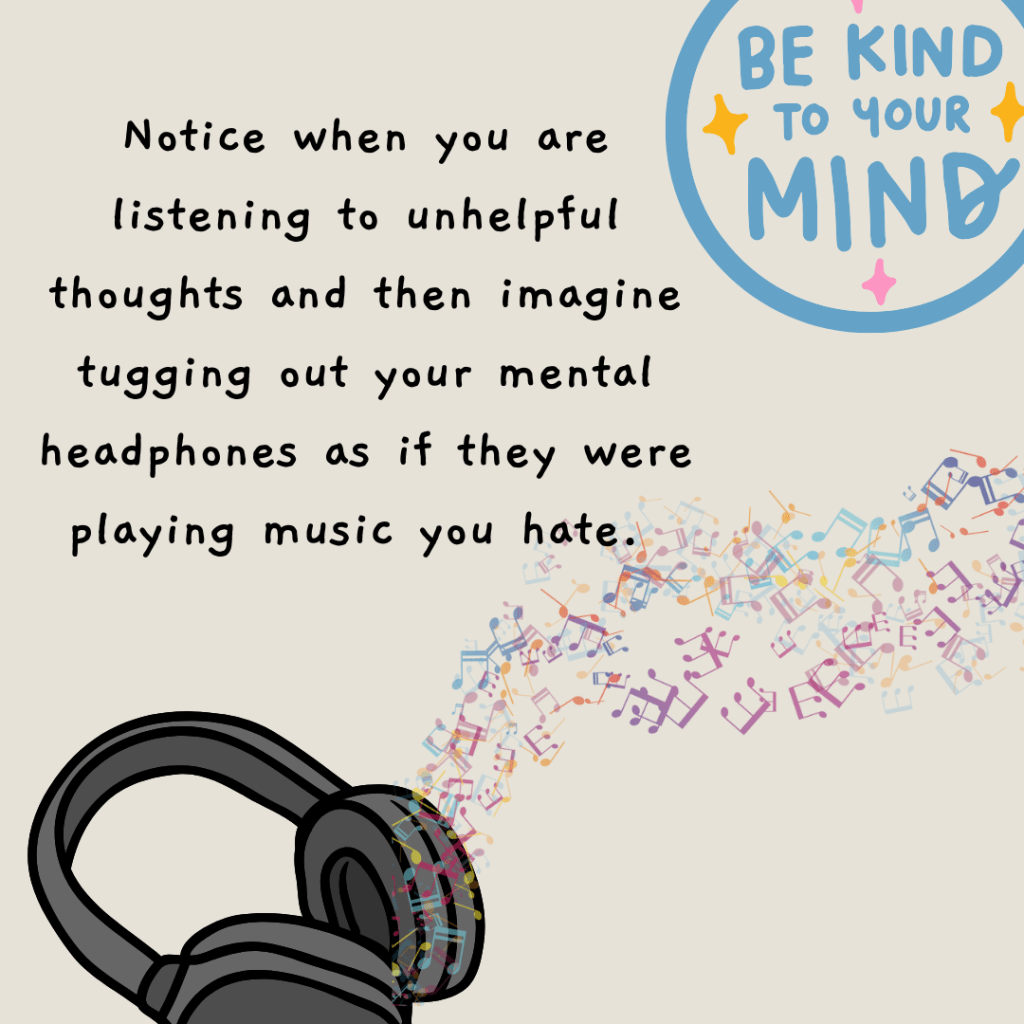
- Naming negative thoughts can help stop them this approach is clinically proven, so when we see an emotion as sad, negative, anxiety inducing or depressing we can name it and start to help it pass, which brings us too. We spent quite a bit of time discussing this and you can see a helpful worksheet with more tips on catching ANTs (Automatic Negative Thoughts) here: https://www.magneticideals.org/home/resources/catchingants/
- Replacing worry with gratitude or decisions – Worry can be stopped by making decisions – worrying sets up a short-term reward system in the brain. In the short term, worrying makes your brain feel a little better — at least you’re doing something about your problems – worrying can help calm the limbic system. However, if you decide to do something (even if you are not sure it is the right thing) this can significantly reduce the worry about the situation. Avoiding making decisions can be energy and confidence draining.
- Gratitude – It’s not finding gratitude that matters most; it’s remembering to look in the first place. Remembering to be grateful is a form of emotional intelligence, even if you are struggling to find something to be grateful or the process of searching helps. Gratitude can boost neurotransmitter serotonin and activate the brain stem to produce dopamine, and dopamine is our brain’s pleasure chemical.
- Finding joy in life – making time for small joys, and living in the moment from savouring a cup of tea, reading a book, take notice of what is around you. Mindfulness techniques can be very useful.
- Doing something new or different just for you – treat yourself to something each week, it can be something physical like some nice food or a coffee our, or a visit to somewhere new, maybe just an hour doing nothing, or taking time out to watch a movie or have a bath.
- Saying “I love you” while looking in the mirror – if you can’t manage this then other “mirror work” will do! This can be any positive statement or affirmation which you are looking at yourself or when you catch your own reflection!

Physical wellbeing – this is not always easy as we struggle with busy lives and health issues but here are some tips…
- Sleep – having poor sleeping patterns plays havoc with out bodies and minds. Trying to get at least 8 hours sleep is recommended. Avoid caffeine in the afternoon and evenings and avoid screens or use a blue light filter for at least an hour before bed.
- Food – trying to eat regularly and healthily is so important. Low blood sugar can cause low mood and irritability.
- Activity – Regular exercise such as cycling or gym-based aerobic, resistance, flexibility, and balance exercises can boost your mood and confidence. Exercise can be as effective as medication and psychotherapies. Start gentle, there are free classes online and as little to four minutes of movement a day can help you start building some good practices!
- Nature and Daylight – did you know that even looking at a pictures of nature can lower your stress levels. Try getting out for a short walk by the sea or in a park, making sure you get out of the house every day if you are able.

Collective Care
Collective care is about seeing wellbeing as beyond just an individual’s responsibility but as something that all people can contribute to and shape together. Collective care contributes to the growth and sustainability of the individual members of society and of society itself. It is important as it is the social side of self-care and these connections are important. We see ourselves not just in the stories we tell ourselves but also in ourselves reflected back through others, this can be validating and isolation can therefore play a huge role in diminishing our confidence. Collective care involves finding was to have positive engagements in society that are reciprocal and, where possible, joyful.
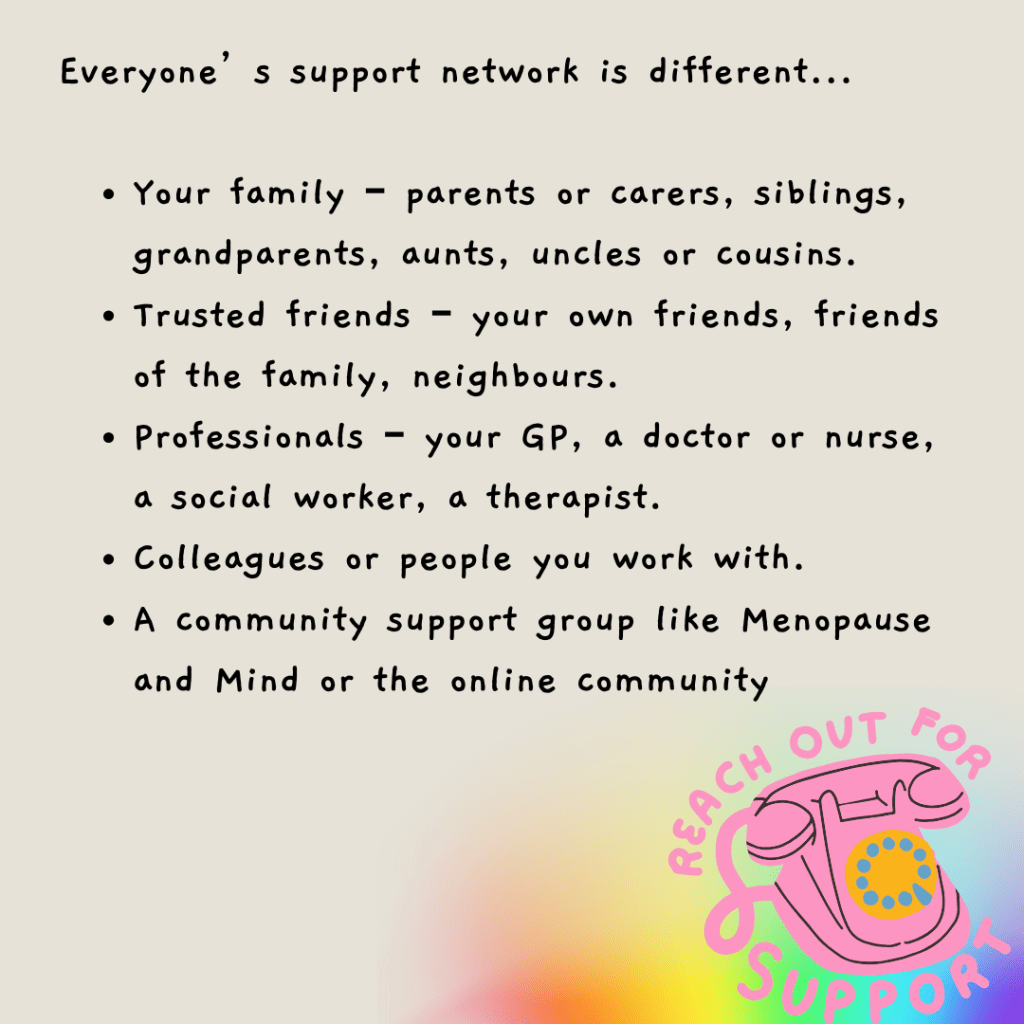
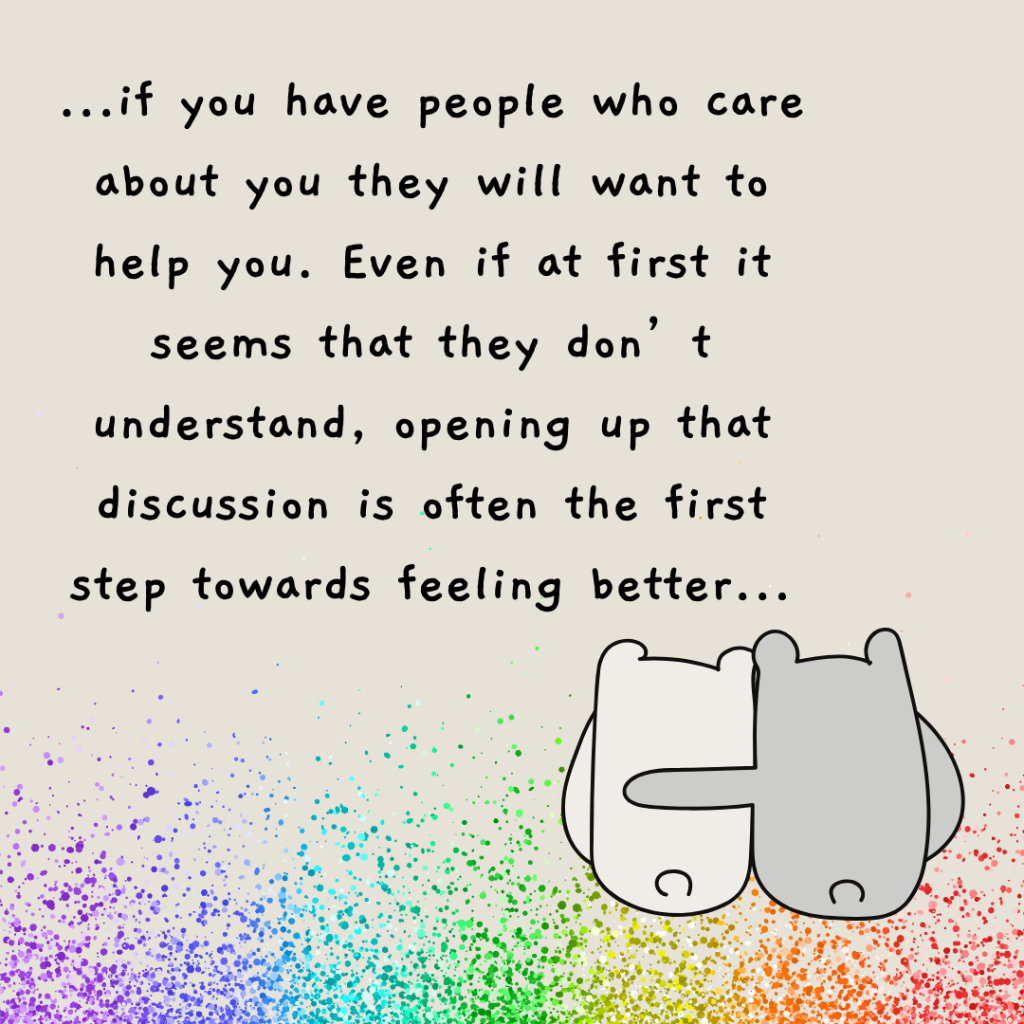
- Accepting for and/or asking for help when you need it – seems obvious, but so often we don’t! Generally the most successful people in society are the people who have the most support. Reach our if you are not feeling good and let others help lift you up and raise your confidence. You may reach out to family or friends, a doctor or a support group. Online or in-person there is help out there if you need it!
- Making time to connect with friends and families – just sending a text, having a phone call or meeting for a walk or a coffee can be a great way of building connections and your confidence levels!
- Attending groups or classes, or learning a new skill – this is both a great way of meeting new people and of learning new things which will boost your confidence. There are many free and cheap events and classes around Brighton and online that will help you connect with other social communities.
- Getting involved with a campaign or volunteering – if you have time get involved with a cause in a big or small way, there are loads of groups that look at the causes from the environment to , you can do something small like sign a petition or volunteer to help out somewhere in person. Every action counts…
- Small acts of kindness – similar to the above small acts of kindness connect us to our communities and lift us up by lifting up those around us.
Write down one thing you can do that is a piece of collective care – seal your card in an envelope and hand it in with your address on it, this will be posted out to reminding you of how you have set out to cultivate inner kindness.

Resources
Sleeping
Relaxation Hypnosis Recording: https://bit.ly/relaxationwithsally
Sleep Hypnosis Recording: https://bit.ly/sleephypnosisrecording
NHS Sleep Advice – https://www.nhs.uk/every-mind-matters/mental-health-issues/sleep/
Guide to mirror work – https://www.mindbodygreen.com/articles/mirror-work
Exercise Websites
Do Yoga With Me – https://www.doyogawithme.com/
NHS Fitness Studio Exercises – https://www.nhs.uk/conditions/nhs-fitness-studio/
Discounts for local activities – https://www.brighton-hove.gov.uk/health-and-wellbeing/support-be-active/discounts-local-activities
Active for life project – https://www.brighton-hove.gov.uk/libraries-leisure-and-arts/sport-and-activity/active-life-project
Gratitude App
Gratitude app for android devices – https://presently-app.firebaseapp.com/
Walking and Running Groups – Brighton and Hove
Brighton and Hove Ramblers – https://bahr.org.uk/
Run Brighton – https://runbrighton.com/clubs/
Some meditations to try:
Stay in bed morning meditation – https://youtu.be/yyvRhL_jOoY
Another morning meditation where you can stay in bed! – https://youtu.be/8xyLnne7nAc
F**k it meditation for emotional release – https://youtu.be/wnh9NmU_oKc
Positive affirmations (you can do these with your eyes open or even walking around) – https://youtu.be/LkS8W5apEvE
This one is a bit longer at 25mins, it an energising mediation and has loads of visual and physical cues which I find helpful to keep me in the moment, it also has a bell at the end in case you fall asleep! https://youtu.be/etwEiMkohB0



 Menopause and Mind
Leave a comment